
Why the Microchip is the 21st Century’s Real Weapon
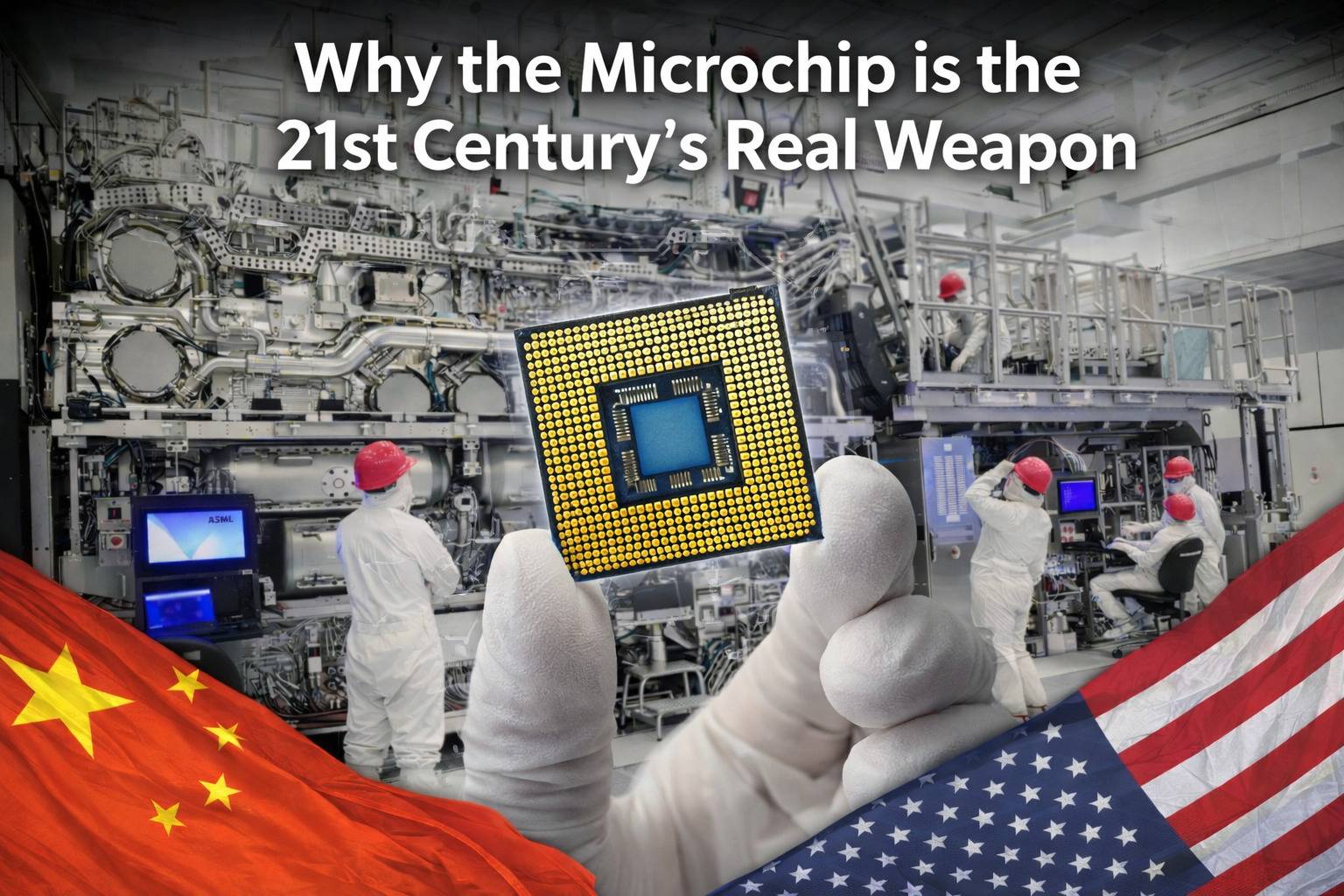
In the 20th century, the geopolitical landscape was defined by the quest for “black gold.” Control over oil fields determined the rise and fall of empires, dictated foreign policy, and fueled the engines of global industry. However, as we enter 2026, a new resource has supplanted oil as the world’s most critical commodity. The microchip—the tiny sliver of silicon that powers everything from your smartphone to hypersonic missiles—has become the ultimate weapon of economic and military supremacy.
The global struggle for dominance is no longer fought solely on physical battlefields; it is being waged in ultra-clean laboratories and high-tech fabrication plants (fabs). Here is why the microchip is the defining weapon of our era and how it is reshaping the global order.
The New Oil: Why the Microchip Matters
A microchip is the “brain” of the modern world. Without it, the global economy would grind to a halt. Every sector—finance, healthcare, transportation, and communications—relies on the processing power of semiconductors.
However, unlike oil, which is found in various regions globally, the production of the world’s most advanced microchip technology is concentrated in a dangerously small number of locations. This “silicon bottleneck” has turned the microchip into a tool of strategic leverage. According to recent Defense Department briefings, the ability to design and manufacture the smallest, fastest microchip (measured in nanometers) translates directly into a nation’s ability to lead in Artificial Intelligence (AI), quantum computing, and modern defense.
The ASML Stranglehold: A Technological Siege
A striking example of the microchip as a weapon is the case of ASML. This Dutch company is the only entity in the world capable of producing Extreme Ultraviolet (EUV) lithography machines. These machines are required to print the intricate circuits on the world’s most advanced microchip designs.
The United States has effectively used ASML as a strategic “choke point” to technologically strangle competitors, specifically China. By coordinating with the Dutch government to restrict the export of EUV machines, the U.S. has attempted to freeze China’s microchip capabilities at a decade-old level. This is a “technological siege” that seeks to deny an adversary the tools necessary for 21st-century modernization.
The Secret of the “Impossible” EUV Machine
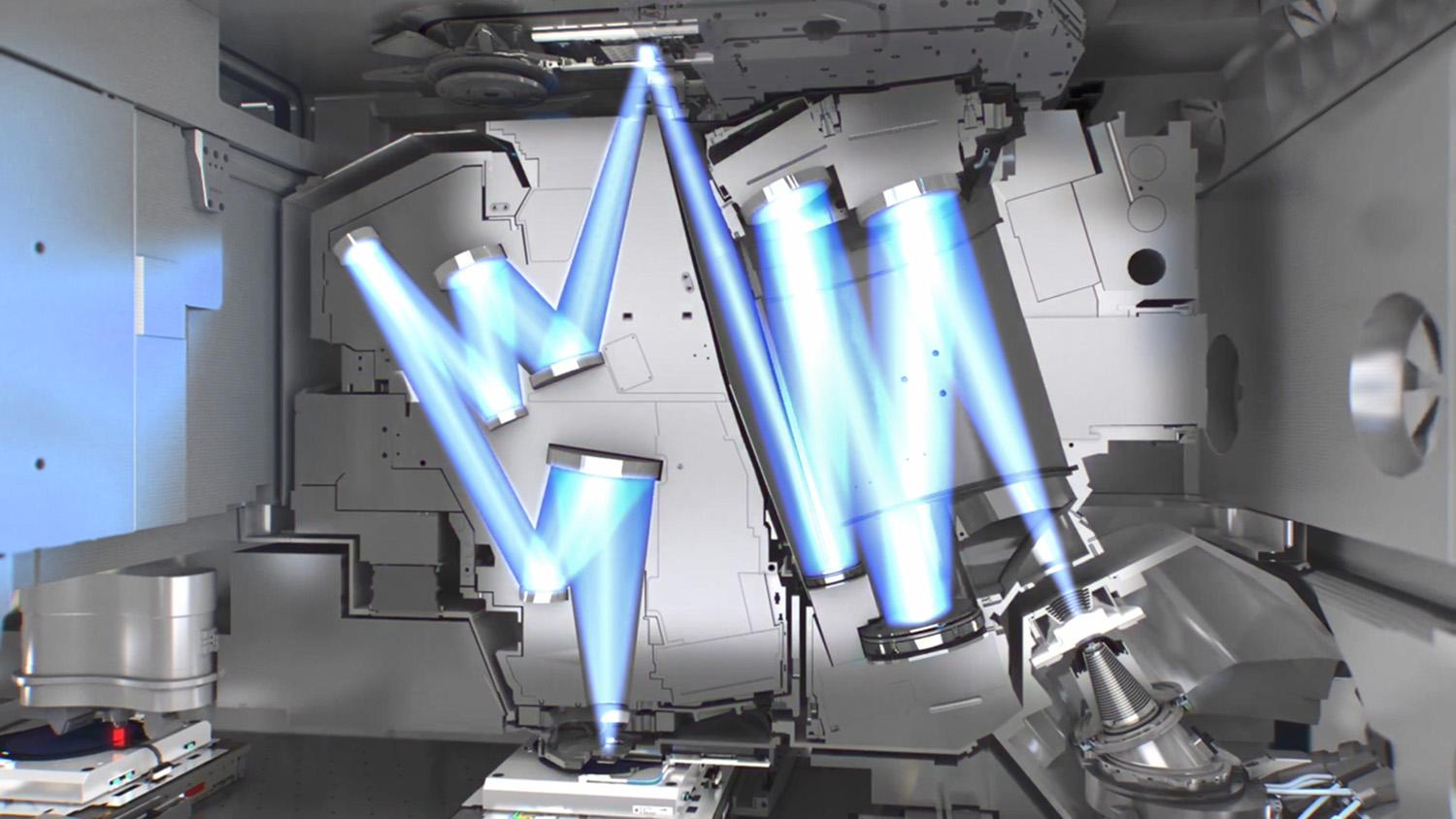
The EUV machine is often cited as the most complex piece of equipment ever built. It uses a laser to blast a droplet of molten tin, creating a plasma that emits a specific wavelength of light (13.5nm) to etch transistors onto a microchip just nanometers wide.
The West believed this technology was impossible to imitate, creating a “moat” that would take decades to cross. As ASML highlights in its own history, it took over 30 years and $9 billion in R&D to master. This monopoly formed the foundation of Western security—until now.
China’s “Manhattan Project” and the Great Collection
Facing a total blockade, China launched what insiders call “China’s Manhattan Project” for semiconductors. This is a state-led effort to achieve microchip self-sufficiency.
Because they cannot buy the machines, China has engaged in the most aggressive collection of human knowledge in modern history. Recent reports from Reuters suggest a Chinese EUV prototype was completed in early 2025 in a high-security Shenzhen lab. This involves:
- Recruiting Global Talent: Luring engineers from Taiwan and the U.S. to bypass decades of trial and error.
- Reverse Engineering: Reports indicate former ASML engineers assisted in building the prototype.
- Yield Breakthroughs: Chinese firm SMIC has reportedly achieved 5nm production using older tools, proving that a technological siege on the microchip is rarely permanent.
The Impact: AI, Taiwan, and the Cost of Living
The microchip war has immediate consequences for global stability:
- Artificial Intelligence: The winner of the microchip war will lead the AI revolution. China is countering U.S. GPU bans by building “super-clusters” of domestic hardware.
- The Taiwan Factor: Taiwan produces over 90% of the world’s most advanced microchip supply. This “Silicon Shield” makes the island the most strategic spot on Earth.
- Consumer Prices: As supply chains bifurcate, the era of “cheap tech” may end. Analysts at Seeking Alpha predict that AI-driven shortages could push electronics prices up by 20% in 2026.
Conclusion: Has the Weapon Been Lost?
The U.S. has long held the microchip as its most potent economic weapon. However, by using that weapon so aggressively, it has forced its greatest rival to innovate at an unprecedented pace.
While the U.S. still leads in high-end design, China is winning the game “without war” by focusing on the backbone of industrial supremacy: cheap energy and high-volume manufacturing of the “legacy” microchip used in everyday goods. In the 21st century, power is no longer just about who has the biggest army—it’s about who controls the silicon.
China’s Secret Manhattan Project



Leave a Reply